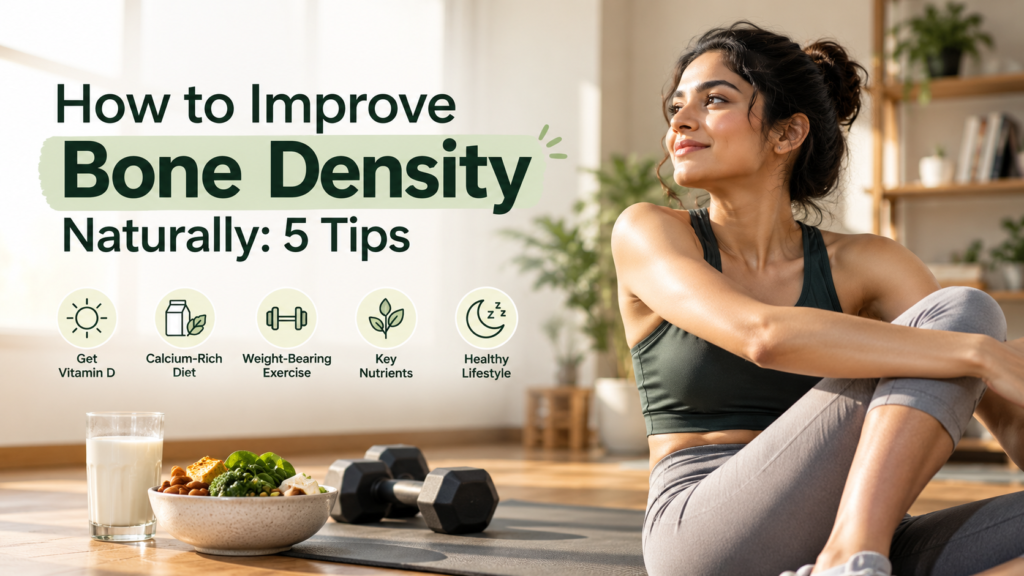
A morning walk, a glass of milk, and a little sunlight may sound like enough for healthy bones. Yet for many Indians, the reality is different. Long hours indoors, limited weight-bearing activity, changing diets, and low vitamin D levels can quietly affect bone health long before anyone thinks about osteoporosis.
The good news? You can improve bone density naturally by taking into consideration a broader scope of things and not depending on just one thing.
The following guide describes the lifestyle, foods to increase bone density, exercise, and vitamins for bone health that may help with enhancing your bone density. It also explains where supplements such as vitamin D3 + K2 and magnesium may fit into the picture.
Why Bone Density Deserves Attention
Bones are living tissue. They constantly break down and rebuild, which means your daily lifestyle can influence how well this process works.
This is particularly relevant in India, where vitamin D deficiency has been reported at very high rates across different population groups. One review found vitamin D deficiency to be widespread across the Indian subcontinent, despite the country’s abundant sunshine. (PubMed Central (PMC))
So, if the goal is to improve bone density naturally, getting enough vitamin D, calcium, protein, and other essential nutrients matters, but so does staying physically active.
1. Start with the right foods for bone density
Bones are not made of calcium alone. The proper nutrition that provides all the necessary vitamins comes from the consumption of different foods. In order to have healthy bones, one needs more than calcium alone.
Some good foods for bone density include:
- Dairy products like milk, yogurt, and cheese for calcium and protein
- Ragi, sesame seeds, and leafy vegetables
- Soybean, tofu, and other plant-based sources of protein
- Almonds and other nuts
- Other high-protein foods like eggs and fish, according to food preference
- Fruits and vegetables containing magnesium, vitamin C, and other micronutrients
Bone is not made up of just minerals, so protein too is very important. Sufficient protein provides the framework for deposition of minerals.
If you want to improve bone density naturally, focus on getting a wide range of nutrients from different food groups rather than eating large amounts of one specific food.
2. Don’t ignore vitamin D
Calcium works only if you have enough vitamin D in your body.
This is why vitamin D is one of the important vitamins for bone health. It helps in the absorption of calcium in the intestine to aid normal mineralization of bone.
Your body can make vitamin D with regular, sensible sun exposure. But how much vitamin D your body makes depends on a number of things, such as your skin type, the season, your clothing, where you live, and how much time you spend outdoors. If you suspect deficiencies , blood tests and clinical guidance are more helpful than assuming you need more nutrition .
This is one reason people looking to improve bone density naturally should consider their vitamin D status rather than focusing only on calcium intake.
3. Think beyond calcium: Vitamin K2 and Magnesium
Bone health is teamwork. Vitamin D promotes calcium absorption, while vitamin K assists in the activation of proteins responsible for bone metabolism. There is still research under way, but it is promising, so K2 must only complement your diet, not replace a balanced diet and appropriate medical care.
Magnesium also contributes to normal bone structure and vitamin D metabolism.
For people who need additional nutritional support, a combination such as Rasayanam Vitamin D3 + K2 provides plant-based, lichen-derived vitamin D3 alongside K2 MK-7. The current formulation lists 600 IU of vitamin D3 and 55 mcg of K2 per serving.
For broader support, the Rasayanam Magnesium + Vitamin D3 + K2 Combo combines these nutrients.
You don’t necessarily need all three to improve bone density naturally. The right approach depends on your diet, nutritional status, and individual needs.
4. Make resistance exercise part of your routine
Nutrition alone is not sufficient.
Physical exercises such as walking, stair climbing, weight lifting, and others that put healthy stress on the body help to keep the bones strong.
If your daily activity mainly involves sitting, which is becoming more prevalent due to desk jobs and sedentary lifestyles involving lots of screen time, then increasing physical activity will make an impact.
For increased bone density, you need to do things in moderation rather than pushing yourself to extremes. The physical activity chosen should suit your age and fitness.
5. Don’t forget sleep and overall lifestyle
Bone is one component that affects the state of our health generally.
Pretty much all of the aging-related health issues depend on proper intake of various substances, keeping a healthy body weight, getting enough sleep, and stopping smoking habits. Besides, a sufficient quantity of protein and other nutrients in the diet is also an essential condition for good health.
At the same time, there is no reason that one should complicate life with the use of a variety of supplements. Just start with the basics: good food, exercise regularly, get as much sunlight as you can, and sleep well, and you will do just fine.
Can Supplements Help Improve Bone Density Naturally?
Supplements can help fill nutritional gaps, particularly when dietary intake or vitamin levels are inadequate. But they are not a shortcut to stronger bones.
If you want to improve bone density naturally, think of supplements as support for the foundation, not the foundation itself.
While some people might need to use vitamin D, calcium, magnesium, or other types of vitamins for bone density, others might be able to receive sufficient amounts through their diet. In case you need a professional opinion, one can contact a healthcare provider who will help in establishing whether it is really necessary, taking into account your health problems.
The Bottom Line
To improve bone density naturally, one ingredient should not be considered as miraculous. Rather, create a system through food sources, protein and calcium, vitamin D, doing weight-bearing sports regularly, getting enough sleep, and balanced nutrition.
If there is a real deficit in nutrition, micronutrients can help bone health. Although D3, K2, and magnesium may work together, you aren’t obliged by their availability to take all three.
There is no need to get confused about taking different vitamins and minerals, all you have to do is be wise about it.
Simply, you need to know your personal needs to tackle any deficiency, and stick with a plan. That is what will help you to be more successful in making bone denser without relying on supplements only.
Frequently Asked Questions:
1. Can I improve bone density naturally without taking supplements?
Yes. Quite a number of people can support their bone health through nutrition, exercise, proper sunlight exposure, and healthy living practices. Supplements can be effective in cases where there is a deficiency of certain nutrients in one’s body.
2. Does walking help improve bone density naturally?
Walking is a weight-bearing activity that can support bone health, particularly when done regularly. If one is looking to improve bone density naturally, then walking along with some suitable resistance training may help.
3. Is vitamin D enough to improve bone density naturally?
Vitamin D is essential, but it forms just a part of the whole picture. In order to increase your bone density through natural means, there are several other elements your body needs, such as calcium, protein, magnesium, and exercise.
4. Should I take calcium, vitamin D, K2, and magnesium together?
Not necessarily. You don’t need every supplement to improve bone density naturally. The right combination depends on your diet, nutritional status, age, medications, and individual health needs. Supplements are best used to address specific nutritional gaps.
5. Can I improve bone density naturally after age 40?
Healthy habits remain important as you age. A diet containing adequate protein and foods for bone density, regular weight-bearing exercise, sufficient vitamin D, and good lifestyle habits can all support bone health over time.
Disclaimer: This content is for informational purposes only and does not replace medical advice. Consult a healthcare professional before starting any supplements.